Variable sunlight and shifting wind patterns create natural supply fluctuations for solar and wind farms. This intermittency often forces grid operators to rely on fossil fuel backups when generation dips below demand. Fortunately, a bess battery energy storage system bridges this gap by absorbing excess renewable electricity during peak production and releasing it when output falls. At HiTHIUM, as a battery energy storage system manufacturer focused on long-duration technology, we have seen how well-designed storage turns renewable challenges into grid assets. Below we examine three specific ways battery storage improves renewable integration.
The most fundamental contribution of a bess battery energy storage system is time-shifting. During afternoon hours, solar farms frequently produce more electricity than the grid can consume, creating oversupply and price collapses. Storage systems capture this surplus energy rather than letting it go to waste. When evening arrives and solar generation disappears, that stored power is dispatched to meet rising residential demand. This same principle applies to wind farms, which often generate at night when consumption is low.
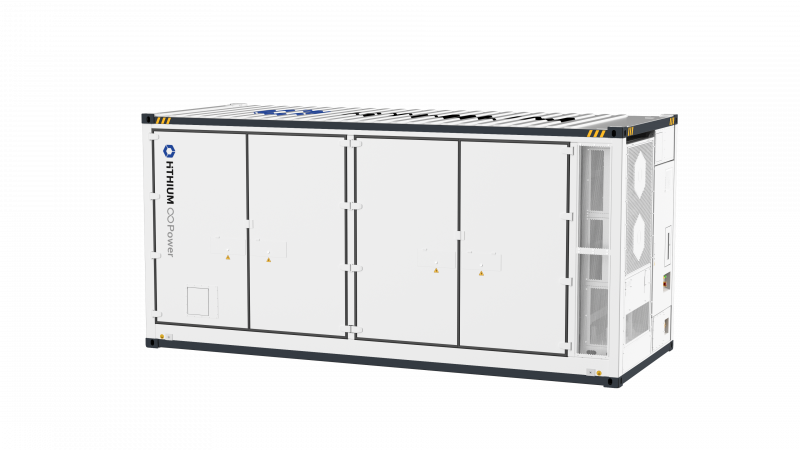
A high-quality bess battery energy storage system ensures that renewable energy—no matter when it is generated—can be delivered precisely when it is needed. The ∞Power 6.25MWh 4h system, built on our reliable ∞Cell 1175Ah lithium iron phosphate cells, is engineered for exactly this kind of daily load shifting, supporting grids in absorbing higher shares of solar and wind without curtailment.
Beyond time-shifting, a battery energy storage system manufacturer must also address the second challenge of renewable integration: grid stability. Solar and wind variability creates frequency fluctuations that can destabilize transmission networks. A bess battery energy storage system responds to these fluctuations in milliseconds, injecting or absorbing power to maintain stable frequency.
Our ∞Power 6.25MWh Desert Eagle series systems are designed to deliver critical grid services, including load shifting, black-start capabilities, frequency regulation, and voltage support. These capabilities help utilities increase renewable penetration while reducing dependence on conventional fossil-fuel-based backup generation. This demonstrates how storage technology can directly strengthen renewable hosting capacity and improve grid flexibility.
A third mechanism is real-time smoothing. Short-term cloud cover can cause solar farm output to drop sharply within seconds, while wind gusts create sudden generation spikes. Without a bess battery energy storage system, grid operators must keep spinning reserves—often gas turbines—running continuously to absorb these shocks. Storage eliminates the need for such wasteful backups by absorbing sudden surges and filling transient gaps.
The ∞Power 6.25MWh Desert Eagle series incorporates multi-layer insulation capable of lowering internal temperatures and ensuring reliable operation across a wide temperature range from -30 °C to 60 °C, helping maintain stable performance even in demanding operating environments. For a battery energy storage system manufacturer, field-proven durability is what makes large-scale renewable integration truly workable.
Pathways to higher renewable penetration depend on flexible, durable storage. From shifting excess generation to stabilizing frequencies and smoothing short-term variability, a bess battery energy storage system directly solves the intermittency that has historically limited solar and wind deployment. As a battery energy storage system manufacturer, we continue to develop solutions that make clean energy more dependable for utilities and communities worldwide. We invite you to explore our ∞Power series and see how our systems can support your renewable integration goals.




 Previous: