Consider this: a stack of high-grade battery cells does not automatically guarantee a performing bess battery energy storage system. Real-world projects repeatedly show that the difference between a profitable asset and an underperforming one lies in how well every component works together as a unified whole. At HiTHIUM, we understand that successful battery storage systems are not built by sourcing parts from different vendors and hoping for compatibility. They are engineered through deliberate, systematic integration that spans cell selection, thermal management, control software, and grid connection. Without that integration, even the most advanced components deliver suboptimal economics over their operational lifetime.
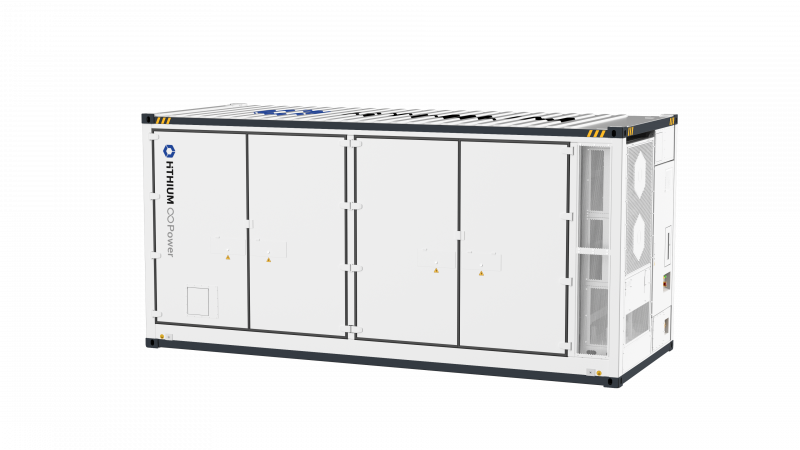
Project owners often focus on cell costs, but system-level integration generates far greater financial impact over the asset's service life. When components are not properly integrated, inefficiencies accumulate—thermal imbalances shorten cycle life, mismatched communication protocols cause control delays, and unpredictable performance reduces revenue from grid services. With our ∞Power 6.25MWh 4h and ∞Power 6.25MWh 2h products, every element from the ∞Cell 1175Ah or 587Ah LFP cell at the core to the liquid cooling system and BMS is designed as a single, coherent system rather than an assembly of separate parts. This approach protects the economic case for any bess battery energy storage system, converting lower degradation and higher availability into measurable returns.
When a battery storage systems project uses components from multiple suppliers, operators face a patchwork of dashboards, data formats, and service agreements. This fragmentation slows issue resolution and increases unplanned downtime. TWAICE's 2026 BESS Pros Survey found that half of industry professionals consider system performance and availability their foremost concern, while 41% of operators report that site issues lead to revenue losses "all or most of the time". Integrated battery storage systems eliminate this fragmentation. Our ∞Block 5.016MWh product incorporates a single BMS, EMS, and thermal management framework from the factory floor to the project site. Whether operating in the ∞Power 6.25MWh 2h configuration for shorter-duration applications or other configurations for extended discharge windows, a unified control architecture replaces reactive troubleshooting with predictable, data-driven operations.
Components degrade differently when forced to operate outside their intended parameters. Integration errors—such as inappropriate cooling distribution or mismatched charge/discharge logic—accelerate capacity fade and force premature replacements. The operational costs of poorly integrated bess battery energy storage system projects often exceed initial savings from fragmented procurement. Our products use liquid cooling systems that maintain uniform temperatures across every cell, preserving capacity for more cycles. We have implemented multi-level active fire detection and protection systems that meet NFPA 855 standards, guarding against cascading failures that would otherwise cut a project's economic life short. Commissioning for these integrated battery storage systems proceeds more predictably because compatibility conflicts have been resolved before equipment arrives on site.
Integration is not an optional engineering step. It is the discipline that transforms components into value. From the ∞Cell inside to the control logic that manages every discharge cycle, a properly integrated bess battery energy storage system delivers higher availability, lower operational expenses, and longer service life. Projects built on fragmented approaches may appear lower in initial cost, but integrated battery storage systems consistently outperform them over the full asset lifecycle. At HiTHIUM, we design integration into every product from the start, because real project value comes from systems that work as one.




 Previous: