Take a closer look at any battery energy storage system, and you will find that module-level architecture determines whether efficiency stays high or gradually fades over the system’s lifetime. At HiTHIUM, we design our ESS battery module solutions from the ground up to minimize losses that typically accumulate when modules are poorly integrated. From the internal electrical topology to the way each cell is thermally managed, every architectural choice affects how much usable energy the system ultimately delivers. A well-engineered ESS battery module maintains consistent performance across thousands of cycles, while a poorly designed one squanders energy through avoidable inefficiencies.
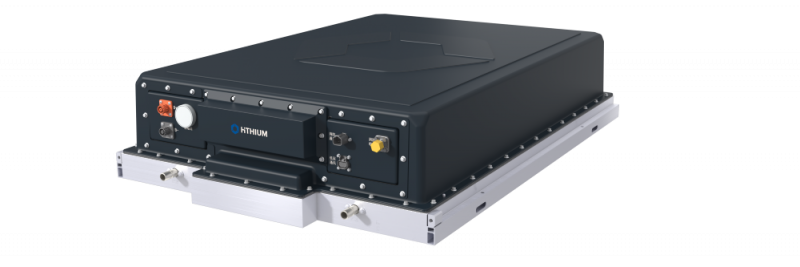
Non‑uniform heating within a module is a primary driver of performance loss. When some cells operate at higher temperatures than others, their internal resistance diverges, forcing the entire system to be governed by the hottest cell. This accelerates degradation and lowers overall energy output. Our ESS module designs incorporate liquid cooling as a standard feature, delivering consistent temperature control across each individual cell. This approach directly prevents the kind of uneven aging that silently drains energy efficiency over time. With the ∞Pack 195kWh 4h configuration, which uses 1P52S module architecture and liquid cooling with ethylene glycol‑water solution, we achieve weight energy density of at least 167 Wh/kg and volume energy density of at least 274 Wh/L. A well‑managed ESS battery module ensures that all cells age at roughly the same rate, preserving capacity and extending the system’s usable life.
How cells are connected within a module has a direct impact on current distribution and energy flow. Series connections increase voltage, while parallel connections provide additional capacity, but both configurations introduce specific inefficiencies when mismanaged. In parallel‑connected modules, small cell‑to‑cell variations in impedance can lead to uneven current sharing, with some cells being overworked while others are underutilized. This not only reduces immediate energy throughput but also accelerates the aging of overstressed cells. Our ESS battery module architectures are optimized to minimize these parasitic losses through carefully matched cell groups and low‑resistance busbar designs. For longer‑duration applications, the ∞Pack 195kWh 2h configuration uses a 1P104S module layout and runs on HiTHIUM 587Ah battery cells, achieving a cycle life meeting GB standards. The ESS module topology directly governs how effectively stored energy can be retrieved without being lost to internal resistance.
Once multiple modules are combined into a complete storage system, variation between ESS battery module units becomes a critical concern. If one module has slightly lower discharge capacity than its neighbors, the entire system’s available energy is limited by that weaker unit. This phenomenon, sometimes called the “shortest plank” effect, can significantly reduce the practical capacity of a large installation. Our module‑level quality control minimizes these discrepancies, while advanced battery management algorithms actively balance state-of-charge across all connected ESS module units. Consistent manufacturing practices mean that modules can be scaled into larger systems without sacrificing round‑trip efficiency. The 1P52S and 1P104S configurations offered in our ∞Pack series are built around HiTHIUM’s 314Ah, 587Ah, or 1175Ah LFP cells, each selected for very low internal variance across production batches.
Module architecture is not a secondary detail—it is the foundation of long‑term system efficiency. By focusing on precise thermal management inside each ESS battery module, optimizing electrical connection topologies, and controlling inter‑module variation, HiTHIUM delivers energy storage solutions that perform as intended for the duration of their service life. Our ∞Pack series, available in 1P52S and 1P104S configurations, provides liquid‑cooled modules that maintain stable cell‑level temperatures for improved energy efficiency. Whether for grid‑scale or commercial applications, a smartly designed ESS module makes the difference between energy kept and energy wasted.




 Previous: