At HiTHIUM, we believe that true progress in energy storage comes from the chemistry itself—not just external engineering. By rethinking how lithium battery technology interacts with electrode materials and electrolytes, we have made meaningful strides in extending cycle life. Our work focuses on the molecular details of battery chemistry, because that is where long-term performance begins. Every charge and discharge cycle puts stress on internal components, but with the right chemical design, batteries can run reliably for many thousands of cycles. That is the standard we pursue every day.
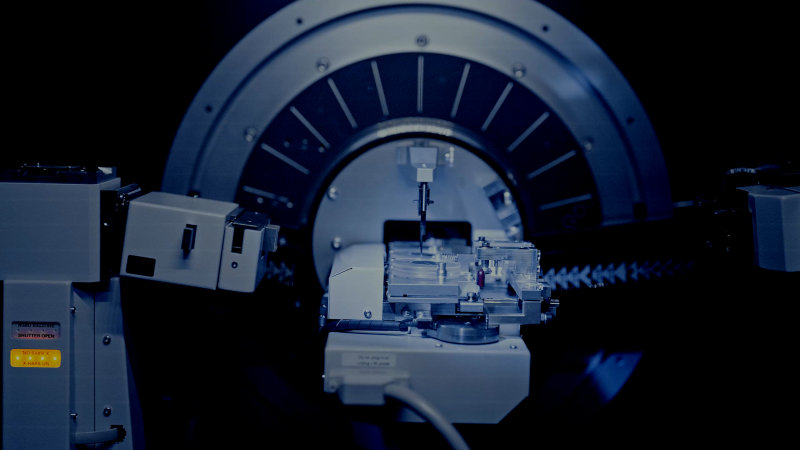
One of the most promising areas in lithium battery technology is the development of advanced electrolyte materials that actively respond to internal conditions. Traditional electrolytes simply facilitate ion movement, but they do little to counteract degradation. At HiTHIUM, we have constructed a “smart” lithium-ion electrolyte material by precisely designing molecular structures and solvation shells. This intelligent approach uses artificial intervention to directionally optimize the electrode interface film. When micro-damage occurs on material surfaces, the electrolyte helps identify and respond to those issues at an early stage, reducing further deterioration. This active protection mechanism represents a meaningful shift in how lithium ion battery technology can be applied to long-duration applications. By keeping the internal chemical environment stable, we reduce side reactions that consume active material, which means batteries retain more usable capacity cycle after cycle.
The positive and negative electrodes each play distinct roles in determining how many cycles a battery can survive. Cathode degradation—such as particle cracking under repeated expansion and contraction—is a major source of capacity fade in many battery systems. To address this challenge, we have developed high-stability cathodes using a multi-level nanostructure design combined with low-defect regulation, which fundamentally reduces particle fracture and reinforces structural integrity. On the anode side, we apply a low-lithium-consumption graphite technology with enhanced surface quality. By precisely controlling precursor materials and particle structures, we create graphite with fewer surface defects and stronger structural stability. This approach lowers initial lithium loss and builds a more resilient SEI (solid electrolyte interphase) layer, substantially reducing the consumption of active lithium during cycling. Together, these cathode and anode innovations create the foundation for exceptional cycle stability.
Long cycle life cannot be achieved without strong safety and consistency. Chemical degradation often accelerates when batteries run hot or when internal short circuits occur. To address this, we use multilayer doping and coating technologies on cathode active materials, balancing high thermal stability with strong electrochemical performance. On the separator side, a high-heat-resistant ceramic coating raises the critical temperature for thermal runaway, while reducing cross-talk reaction heat and improving intrinsic safety. Consistency also plays a large role in battery pack longevity. Variations between cells can cause some units to work harder than others, accelerating their failure. Through advanced manufacturing techniques such as full-tab stacking and specialized formation processes, we achieve better electrode interface stability and more uniform long-term cycling behavior across all cells.
Extending battery cycle life is not just about incremental fixes—it requires rethinking the fundamental chemistry at work inside each cell. At HiTHIUM, we combine smart electrolyte design, stable electrode engineering, and rigorous safety measures to push the boundaries of what lithium battery technology can achieve. As lithium ion battery technology continues to evolve, we remain focused on the chemical innovations that make long-duration, reliable energy storage a practical reality.




 Previous: