Much has changed in how we store energy. A few years ago, lithium-based power packs were seen as mature but slow-moving. That view is now outdated. Today, lithium battery technology is advancing on multiple fronts—materials, safety engineering, and large-scale manufacturing. These improvements are not just incremental. They are reshaping what a new battery technology can deliver in real-world applications. At HiTHIUM Bess, we see this transformation every day in our research and production. From smarter electrolytes to record-setting cell designs, the breakthroughs happening now are making energy storage more durable, safer, and more affordable. Here are three key areas where lithium battery technology is taking a genuine leap forward.
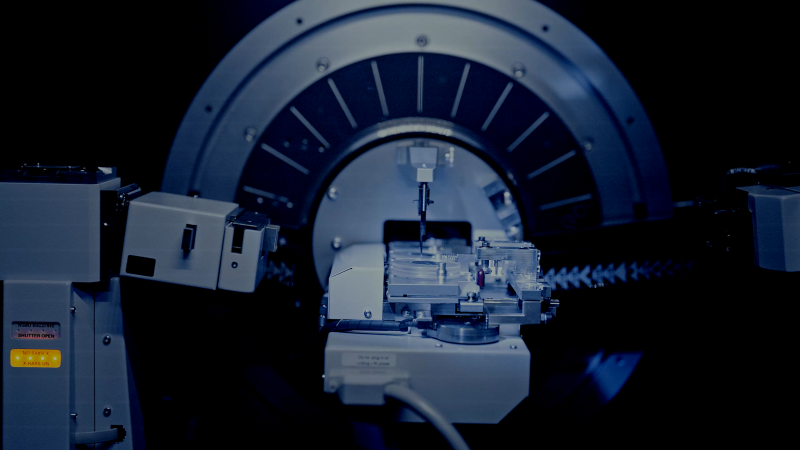
One of the most significant breakthroughs lies in materials science. Traditional lithium-ion cells degrade because of tiny side reactions happening inside them over time. To address this, researchers have developed smarter components. For instance, new electrolyte formulas can now sense micro-damage on material surfaces and intervene to extend cell life. On the anode side, advanced graphite designs reduce surface defects and cut down on the loss of active lithium, which is a major cause of capacity fade. Similarly, next-generation cathodes use nano-engineered structures that resist cracking under repeated charge and discharge. These innovations make new battery technology far more durable for long-term use. At HiTHIUM Bess, we apply these principles across our product lines. For example, our lithium battery technology incorporates high-stability materials that significantly slow down degradation, giving our systems a more reliable lifecycle.
New battery technology is not just about more cycles. It is also about making each cycle inherently safer. A critical area of progress is thermal stability. Advanced ceramic-coated separators, for instance, can now withstand higher temperatures before failing. This means the cell's critical failure threshold is raised, reducing the risk of thermal runaway. Active materials themselves are being upgraded. On the cathode side, multi-element doping improves heat resistance. On the anode side, low-defect graphite minimizes heat generation from unwanted chemical reactions. Even structural design plays a role. Three-dimensional gas channels allow for 360-degree gas transmission, and directional venting technology ensures that if pressure does build up, it is released in a controlled manner. These layered safety features mean that lithium battery technology can now be deployed in more demanding environments with greater confidence.
Performance is not only about design—it is also about production. A new battery technology is only as good as the factory that makes it. Recent manufacturing advances have dramatically improved cell consistency. For large-format cells like the ∞Cell 1175 Ah, global-first designs have reduced capacity variation from five thousandths to just three thousandths. This level of precision means far fewer cells are needed in a system, which simplifies integration and improves overall reliability. Advanced processes like all-tab lamination and special coating techniques help eliminate particle contamination and ensure even stress distribution within the cell. At HiTHIUM Bess, we have integrated these methods into our production lines, resulting in batteries that perform uniformly over thousands of cycles. When every cell in a pack behaves the same way, the whole system benefits from extended life and lower maintenance costs.
The field of lithium battery technology is evolving rapidly through innovations in materials, safety systems, and manufacturing. These are not distant laboratory concepts. They are already being deployed in products that power homes, businesses, and utility grids. A new battery technology that lasts longer, operates safely, and maintains high consistency is finally within reach. At HiTHIUM Bess, we continue to invest in these breakthroughs to deliver storage solutions you can count on for years to come. The future of energy storage is not about one big leap—it is about steady, meaningful progress across every layer of the battery. And that future is already here.




 Previous: