Home > About > Insights

Smart Storage Integration for Commercial Energy Optimization

2026.06.03
share:

Businesses across diverse sectors contend with a fundamental energy problem: peak-time electricity rates that inflate operational costs, transformer limitations that constrain growth, and grid instability that threatens continuity. At HiTHIUM, we recognize that addressing these interlocking challenges requires more than simply connecting batteries to a building. It calls for an integrated approach where storage technology aligns precisely with how a facility consumes, manages, and pays for electricity. Our focus rests squarely on commercial energy storage systems engineered to turn energy from a fixed overhead into a variable resource that can be shaped to match business priorities.
 

图片36.png


Making Peak Pricing Work for Your Facility


For many commercial enterprises, the electricity bill arrives in two parts—energy charges and demand charges—and the second component can account for nearly half of the total. This is where strategically deployed commercial battery storage solutions alter the equation. Rather than pulling expensive grid power during the afternoon surge when tariffs climb, a storage unit can discharge stored energy to serve the load, effectively bypassing the peak rate window. From our project experience, the core principle is straightforward: charge the system when electricity is cheap or when rooftop solar is generating surplus, then discharge when grid prices reach their daily maximum. This peak-shaving function directly reduces the portion of the bill that finance teams dread most.


Rethinking Space and Thermal Control


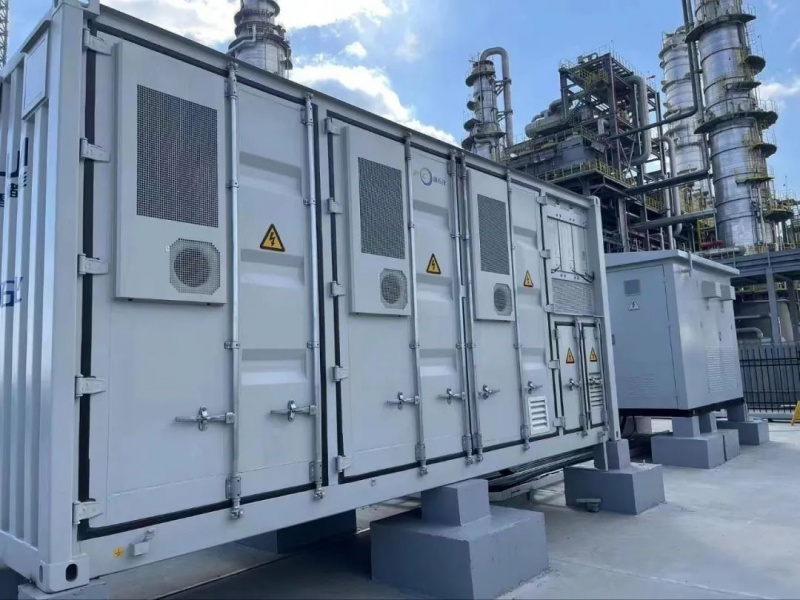
The physical reality of commercial sites imposes hard constraints that utility-scale projects seldom face. Urban office blocks, manufacturing workshops, and retail complexes rarely have spare land to dedicate to energy equipment. We responded to this limitation with a liquid-cooled integrated cabinet that packs 261 kilowatt-hours into a footprint significantly smaller than what conventional designs require. By engineering our own 314 amp-hour cells and assembling them in a high-density architecture, we achieved roughly 20 percent more capacity while shrinking the required floor area by about 30 percent compared with earlier-generation configurations. Liquid cooling does more than condense the system physically. It maintains cell temperature variation within five degrees Celsius, a precision that slows degradation and preserves usable capacity across thousands of cycles. For facility managers, that translates into extended asset life without sacrificing the revenue stream the unit generates.


Safety as a Design Requirement, Not an Afterthought


Storage sited inside or adjacent to occupied commercial buildings must satisfy a higher burden of proof for safety than equipment placed in remote fields. We build our commercial energy storage systems with a dual-layer protection philosophy that starts at the cell and extends to the enclosure. The cabinet carries an IP55 rating, giving it effective resistance to dust ingress and low-pressure water jets, which proves valuable in environments ranging from coastal humidity to interior factory conditions. Inside, a multi-stage active fire suppression system combines intelligent smoke and temperature monitoring with perfluorohexanone gas deliveryan agent that suppresses thermal runaway at its earliest stage before it can cascade. This integrated detection-and-response chain means the unit can identify an anomaly, alert operators, and deploy suppressant autonomously, well before manual intervention would be possible.


Scaling Across Sites Without Re-Engineering


Commercial enterprises rarely grow in neat, predictable increments. A distribution center might add cold storage, a factory might install new production lines, and energy demand follows. The modular architecture we employ allows multiple cabinets to connect side-by-side and interface directly with a low-voltage distribution panel, so electrical capacity can expand in step with business activity. This approach eliminates the cost and downtime of a full system redesign each time load requirements shift. Whether a site needs backup power for critical processes, a means of increasing on-site solar self-consumption, or participation in demand-response programs, the same foundational commercial battery storage solutions can be configured and reconfigured as the business evolves.


A storage system earns its place on a commercial balance sheet by performing across three dimensions simultaneously: it must reduce energy costs, fit within tight physical and operational constraints, and maintain safety standards commensurate with occupied spaces. By integrating proprietary cell technology, precision thermal management, and modular system architecture into a single cabinet, we provide a platform that allows commercial energy managers to exercise genuine control over how and when their facilities draw power. As electricity tariff structures grow more complex and renewable self-generation becomes more common, that control moves from being a competitive advantage to an operational necessity.



OK
Subscription Success
Congratulations on your successful subscription to HTHlUM news
Got it
Please leave your business requirements and our experts will contact you as soon as possible.
Pre-sale
After-sale
Media
Request Brochure
Get Quote
Full Name *
Email *
Phone *
You Are Interested In *
Cell
Module
Utility System
Commercial System
Residential System
Region *
Afghanistan
Aland Islands
Albania
Algeria
American Samoa
Andorra
Angola
Anguilla
Antarctica
Antigua and Barbuda
Argentina
Armenia
Aruba
Australia
Austria
Azerbaijan
Bahamas
Bahrain
Bangladesh
Barbados
Belarus
Belgium
Belize
Benin
Bermuda
Bhutan
Bolivia
Bonaire, Sint Eustatius and Saba
Bosnia and Herzegovina
Botswana
Bouvet Island
Brazil
British Indian Ocean Territory
British Virgin Islands
Brunei Darussalam
Bulgaria
Burkina Faso
Burundi
Cabo Verde
Cambodia
Cameroon
Canada
Cayman Islands
Central African Republic
Chad
Chile
China
Christmas Island
Cocos (Keeling) Islands
Colombia
Comoros
Cook Islands
Costa Rica
Cote d'Ivoire
Croatia
Cuba
Curacao
Cyprus
Czech Republic
Democratic Republic of the Congo
Denmark
Djibouti
Dominica
Dominican Republic
Ecuador
Egypt
El Salvador
Equatorial Guinea
Eritrea
Estonia
Ethiopia
European Union
Falkland Islands
Faroe Islands
Federated States of Micronesia
Fiji
Finland
France
French Guiana
French Polynesia
French Southern Departments
Gabon
Gambia
Georgia
Germany
Ghana
Gibraltar
Greece
Greenland
Grenada
Guadeloupe
Guam
Guatemala
Guernsey
Guinea
Guinea-Bissau
Guyana
Haiti
Heard and McDonald Islands
Honduras
Hungary
Iceland
India
Indonesia
Iran
Iraq
Ireland
Isle of Man
Israel
Italy
Jamaica
Japan
Jersey
Jordan
Kazakhstan
Kenya
Kingdom of Eswatini
Kiribati
Kuwait
Kyrgyzstan
Laos
Latvia
Lebanon
Lesotho
Liberia
Libya
Liechtenstein
Lithuania
Luxembourg
Madagascar
Malawi
Malaysia
Maldives
Mali
Malta
Marshall Islands
Martinique
Mauritania
Mauritius
Mayotte
Mexico
Moldova
Monaco
Mongolia
Montenegro
Montserrat
Morocco
Mozambique
Myanmar
Namibia
NATO
Nauru
Nepal
Netherlands
New Caledonia
New Zealand
Nicaragua
Niger
Nigeria
Niue
Norfolk Island
North Korea
North Macedonia
Northern Mariana Islands
Norway
Oman
Orange
Pakistan
Palau
Panama
Papua New Guinea
Paraguay
Peru
Philippines
Pitcairn Islands Group
Poland
Portugal
Puerto Rico
Qatar
Republic of the Congo
Reunion
Romania
Russian Federation
Rwanda
Saint Barthelemy
Saint Helena
Saint Kitts and Nevis
Saint Lucia
Saint Martin
Saint Pierre and Miquelon
Saint Vincent and the Grenadines
Samoa
San Marino
Sao Tome and Principe
Saudi Arabia
Senegal
Serbia
Seychelles
Sierra Leone
Singapore
Sint Maarten (Dutch part)
Slovakia
Slovenia
Solomon Islands
Somalia
South Africa
South Georgia and the South Sandwich Islands
South Korea
South Sudan
Spain
Spitzbergen
Sri Lanka
State of Palestine
Sudan
Suriname
Sweden
Switzerland
Syria
Tajikistan
Tanzania
Thailand
Timor-Leste
Togo
Tokelau
Tonga
Trinidad and Tobago
Tunisia
Turkey
Turkmenistan
Turks and Caicos Islands
Tuvalu
Uganda
Ukraine
United Arab Emirates
United Kingdom
United Nations
United States Minor Outlying Islands
Uruguay
USA
Uzbekistan
Vanuatu
Vatican City
Venezuela
Vietnam
Virgin Islands of the United States
Wallis and Futuna Islands
Western Sahara
Yemen
Zambia
Zimbabwe
City *
Company *
Demand scale estimation *
MWh
GWh
Expected delivery time *
Other special requeirements
Preffered Method of contact *
By Email
By Phone
Captcha *
I agree that HiTHIUM may send me regular newsletters and up to date information on HiTHIUM products and services, promotions and news via e-mail, post and/or telephone in accordance with the data protection declaration, l can withdraw my consent at any time.
Pre-sale
After-sale
Media
Full Name
Email *
Phone *
Company *
Project Address *
City
State/Province
Zip Code
Country *
Urgent Level *
Very Urgent
Urgent
Nomal
Product Model *
Cell
Module
System
General Inquiry
Under Warrany *
Yes
No
Date of Purchase
Date of Installation
When This Issue Occur *
How Can We Help You With *
Consultation
Complaints
Repair
Training and Guidance
Installation and Commissioning
Regular Inspections
Contractual Services
Details of the Issue *
Reference Image
Captcha *
I agree that HiTHIUM may send me regular newsletters and up to date information on HiTHIUM products and services, promotions and news via e-mail, post and/or telephone in accordance with the data protection declaration, l can withdraw my consent at any time.
You can also get in touch with our service team by sending email with your pre-filled request form.
check email address here
Pre-sale
After-sale
Media
Media Name *
Media Address *
Full Name *
Position *
Email *
Phone *
Purpose of the letter *
Interview
Activity
Visit
Advertising
Other
Detailed requirement description *
Captcha *
I agree that HiTHIUM may send me regular newsletters and up to date information on HiTHIUM products and services, promotions and news via e-mail, post and/or telephone in accordance with the data protection declaration, l can withdraw my consent at any time.